

Exploring entertainment and digital trends as a journalist, I’ve watched a curious shift in how Canadians approach risk and reward. We used to imagine high-stakes drama on trading floors or at casino tables. Now, that same experience has an unexpected echo in the way people regard legal proceedings. Courtrooms, with their built-in tension and clear-cut verdicts, connect with a similar part of our collective imagination. This brings us to a platform like Cash or Crash Live. It doesn’t engage in legal matters. Instead, it functions as a cultural mirror, mirroring a broad curiosity about moments of intense pressure. Outcomes in a real Canadian courtroom settle matters of justice, with profound and lasting impact. Cash or Crash Live harnesses the basic thrill of an “all-or-nothing” moment and delivers it into a controlled, entertaining format. We must keep this distinction sharp: the live legal system operates with solemn duty, not for amusement. Still, recognizing our shared fascination with pivotal moments helps explain why games that simulate edge-of-your-seat tension hold such appeal. They present a version where everything can be won or lost in an instant, without real-world fallout.
Contrasting Virtual Risk with Actual Consequences
The main distinction here is absolute. It comes down to the nature of the stakes. In Cash or Crash Live, the risk is strictly financial and voluntary. It’s confined to the entertainment budget a player decides to spend. The “crash” means giving up that wager. It entails no further legal, social, or personal consequences. The environment is designed for excitement. A Canadian courtroom handles consequences of a distinct magnitude altogether. The stakes are fundamental rights: freedom, financial security, child custody, reputation. The procedures aren’t meant for entertainment. They exist for truth-seeking and the fair application of law. A trial’s outcome can change the course of lives, families, and entire communities. Both arenas involve tension and unknown outcomes. But linking them is a false equivalence. One is a leisure activity that replicates risk. The other is a pillar of democracy, addressing real human conflict with deep and permanent effects.
Takeaway: Different Spheres, Shared Human Fascination
The figurative line between a “courthouse break” and a game like Cash or Crash Live is bright and should not be obscured. Canada’s legal system is a intricate, essential institution for rule and law. Its outcomes are weighed, not haphazardly determined. Cash or Crash Live is interactive entertainment. It wraps the universal excitement of risk and reward into a fast-paced, digital format. What they have in common isn’t mechanism or outcome. It’s a ingrained human attraction with pivotal moments, with tension and its unwinding. One fulfills our societal need for order and fairness. The other caters to a personal appetite for excitement within a safe, recreational context. Understanding this separation lets us appreciate both the weight of the law and the designed fun of a game. Examining culture, I see them as two separate mirrors of how we, as a society and as individuals, navigate the ever-present concepts of chance and decision.
The Role of Entertainment in Respecting Law
Even with the law’s seriousness, the public has always consumed legal drama with an component of entertainment. Think of courtroom sketches on the nightly news, the seemingly infinite stream of true-crime documentaries, or riveting legal thrillers. Canadians are fascinated by narratives of justice. This point doesn’t undermine the system. It emphasizes a human need to understand conflict and resolution. Platforms offering interactive entertainment, like live game shows, function in a separate sphere. Yet they fulfill a similar appetite for engaging narrative tension in real time. They deliver a structured, predictable form of excitement. The rules are clear and the outcomes are direct, bounded by financial limits. This enables people explore feelings of risk and anticipation in a safe, consensual, recreational context. It’s a form of play. It’s fundamentally different from the often grim and always serious business of law. Still, it taps into a similar cognitive hunger for resolved tension and clear outcomes.
Understanding the Canadian Legal Landscape
To recognize where any comparisons with games of chance fall apart, you require a understanding on Canada’s legal underpinnings. The system is a carefully built establishment. It rests on the rule of law, legal precedent, and strict protocol. Its objective is to provide justice, never entertainment. Provincial courts handle everyday disputes, while the Supreme Court of Canada handles constitutional matters. Every step adheres to statutes like the Criminal Code or provincial acts. The process is measured and gradual. Pleadings get submitted. Evidence is produced under strict guidelines. Arguments must center on law and fact. A trial isn’t a unplanned event; it’s the final phase of this detailed planning. The results—guilty or not guilty, liable or not liable—alter lives for the people involved. Judges or juries arrive at these verdicts through careful consideration. They carry a heavy obligation. The outcome is never settled by a spinning wheel or a crashing market. This principled, careful environment couldn’t be more dissimilar from the quick, chance-based excitement of a live game show. The contrast emphasizes the critical gap between societal adjudication for fairness and a personal option for amusement.
Court Cases Are Not a Contest
We should reject any idea that legal matters resemble games of chance. The Canadian justice system is built on equity, evidence, and reasoned argument. A verdict is not a random event. Optimally, it’s the logical conclusion drawn from applying the law to proven facts. Lawyers don’t “wager” on strategies blindly. They construct arguments from research, precedent, and testimony. Judges and juries are not passive spectators hoping for luck. They are engaged, duty-bound arbiters who must deliberate with care. The timeline spans over months and years, not seconds. Framing this as a “cash or crash” scenario distorts and trivializes the pursuit of justice. The metaphor risks reducing complex human stories and legal principles to mere spectacle. The public might follow a sensational trial with a game-like fascination. But the people inside the system are engaged in a deadly serious process. There is zero element of chance in its rulings.
The Appeal of High-Risk Moments
What attracts people, Canadians included, to intense situations? The psychology is clear. These scenarios spark a potent cocktail of adrenaline and dopamine, chemicals connected to alertness and reward. You observe this draw in tense films, contested sports, and games that replicate risk. A courtroom verdict or a critical piece of evidence mirrors a story shape with these moments. There’s a rise of tension, a decisive instant of revelation, and a definitive conclusion. Platforms like Cash or Crash Live plug directly into this wiring. They compress the narrative into a rapid, visual format. The core “cash or crash” mechanic poses a common human dilemma. Do you cash your winnings or risk them for more? It’s a basic, risk-free version of life’s bigger gambles, like putting savings or waiting for a jury. For players, it establishes a protected space to experience the thrill of choosing under pressure. The stakes are individual points or tokens, not someone’s liberty or livelihood.
Cash or Crash Live: A Game of Strategy and Nerve
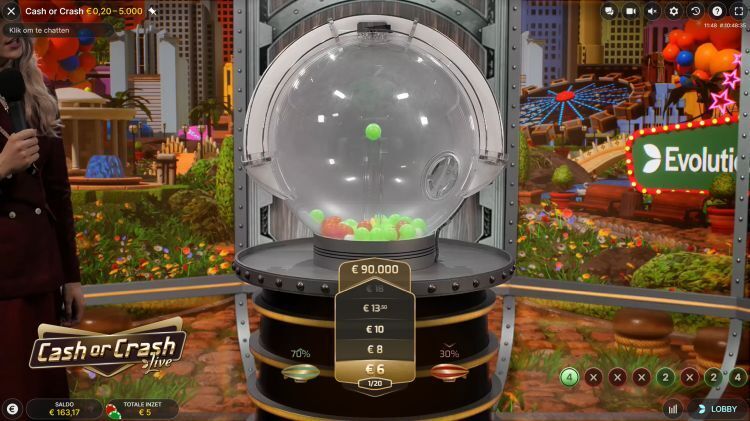
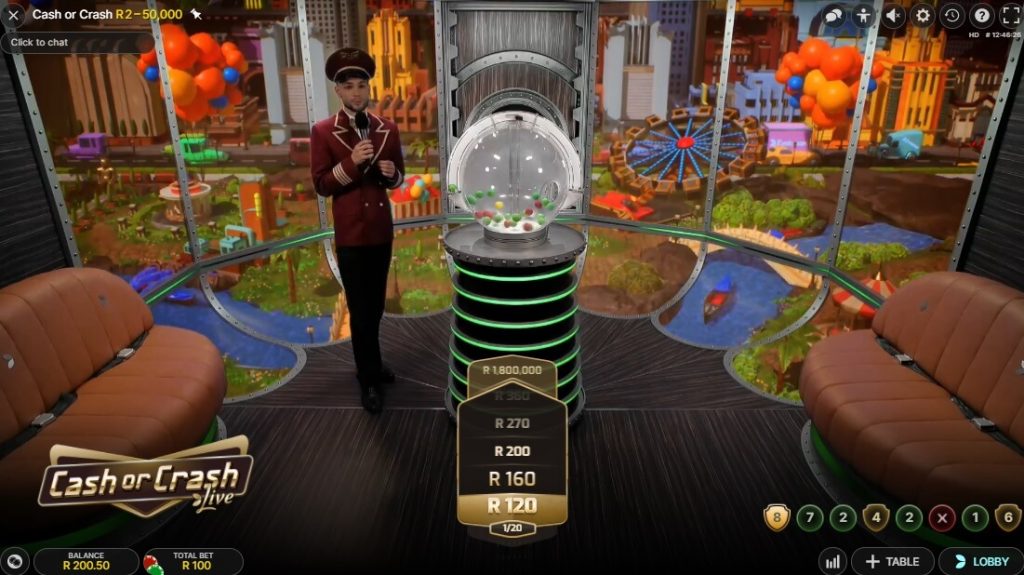
Cash or Crash Live is a dealer-led game show built on the psychology of uncertainty https://cashorcrash.ca/. A real host presents the event in actual time. The idea is basic and gripping. A multiplier, connected to a simulated rocket, starts climbing from 1x. Contestants make a wager ahead of the round. As the multiplier rises, they confront a one option: cash out to guarantee their stake boosted by the present value, or stay for greater returns. The hook is that the vehicle can “blow up” at any sudden instant. When it explodes, the factor returns to 1x. Anyone who stayed in gives up their wager. No ability can anticipate the explosion. It’s a unpredictable happening driven by a verified algorithm. All the strategy rests in the moment of the withdrawal choice. This creates a tangible, collective tension. Audience members see the multiplier climb, noticing which players bank their prizes and which observe potential gains disappear. It’s a true, concentrated taste of uncertainty versus profit.
Conscious Engagement with Chance-Based Entertainment
For Canadian players who appreciate the excitement of chance-based entertainment like live dealer games, safe engagement isn’t just a piece of advice—it’s vital. Rule one is to view the activity as paid entertainment. It is not a source of income or a solution for financial difficulties. Set a clear budget, an amount you can afford to lose fully, and hold to it without excuses. Set time boundaries for your playing times. Avoid playing when you’re emotionally upset. Stick to trustworthy, licensed platforms governed by provincial bodies in Canada. These ensure crucial measures like certified random number generators, along with features for setting deposit limits or self-exclusion. Your mindset should match a leisure activity. The cost of involvement should be like purchasing a ticket to a movie or a ball game. The instant it stops feeling like fun, the instant it seems like a habit or a financial necessity, it’s time to quit. Every Canadian territory offers responsible gambling resources. Take advantage of them.

